


Trump claims Republicans would win every state if voter ID law passes
Trump claims Republicans would win every state if voter ID law passes

Alex WoodwardMon, August 24, 2026 at 2:58 PM UTC
79
The Independent and Yahoo will earn a commission from purchases made via links in this article. Pricing and availability are subject to change.
Desperate for the courts and Congress to get behind his sweeping proposals for federal control of elections, Donald Trump has suggested that he thinks Republican candidates would win every state if the Senate passes his nationwide voter ID proposal.
The president shared a post on his Truth Social that showed a U.S. map showing every state turning “red” with the all-caps caption “THE WHOLE MAP WOULD BE BRIGHT RED IF THE SENATE PASSED VOTER ID LAWS,” a reference to the White House-backed SAVE America Act.
The post, originally from X user @MAGAVOICE, follows the president’s demands for Senate Republicans to get behind his bill, which would mandate that every state accept only specific identifying documents to register to vote, including a U.S. passport or birth certificate.
The legislation also would require government-issued ID to cast a ballot and directs states to audit voter rolls and cross reference those names with a database compiled by the Department of Homeland Security.
Trump’s legislation also would ban universal mail-in voting — a proposal the administration is also trying to push through the Supreme Court.
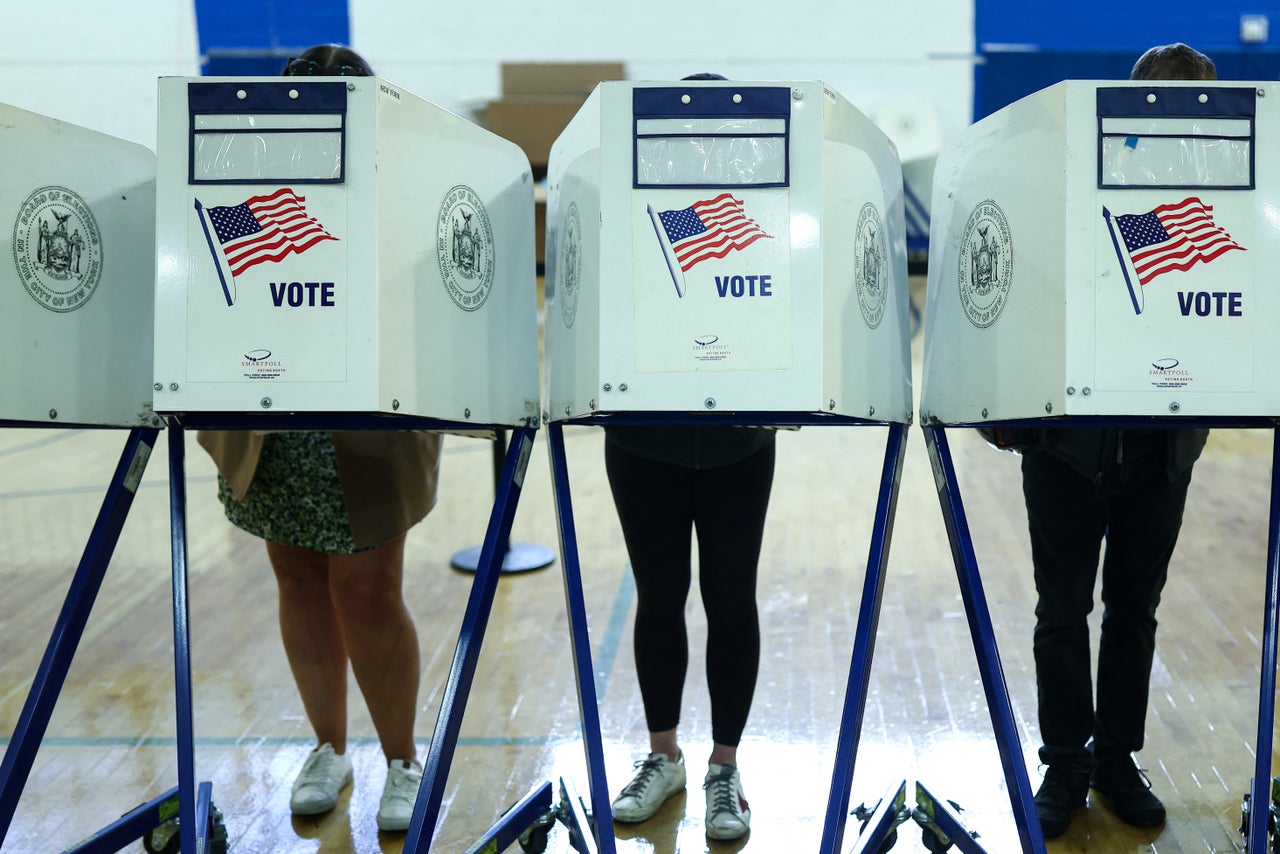
Donald Trump claims Republican candidates would win every state if the Senate passes his sweeping voter ID and mail-in voting proposal as he makes another desperate plea for Congress and the courts to act (AFP/Getty)
Trump’s bill is at a deadlock in the Senate despite its passage in the Republican-dominated House. The president is calling for Senate Republicans to blow up the filibuster to pass the legislation by simple majority vote to enact major changes to election administration — which is controlled by the states under the Constitution — in time for midterm elections, with the fate of his final years in office at stake.
Senate Majority Leader John Thune has repeatedly expressed doubts about sacrificing the filibuster to pass a bill that could have enormous consequences for election rules with just weeks before final ballots are cast. The Senate agreed to a monthlong recess, without objection, earlier this month, leaving only a precious few weeks to debate and pass a bill before Election Day.
Still, Trump has tried to argue for its passage in increasingly desperate terms, including not ruling out the possibility of a national emergency to put the rules in place.
His latest post — dangling an idea to members of his party that they’d never lose an election again — also follows a parallel legal battle to implement new rules for mail-in ballots.
Trump is waiting for the Supreme Court to decide on whether to give his administration permission to implement new rules that could significantly roll back voters’ access to mail-in ballots this year.
Federal courts have blocked the U.S. Postal Service from further implementing Trump’s executive order that sought to create a national voter registration list that would be used to decide who is eligible to cast a ballot.
Advertisement
If the Supreme Court doesn’t stop them, the judge’s rulings will “effectively run out the clock” on the administration’s attempts to implement the executive order before November’s elections, U.S. Solicitor General D. John Sauer wrote to the high court earlier this month.
On August 21, the Postal Service published its new rule that adds new certification requirements to all mail-in ballots, as per Trump’s order. Those changes cannot go into effect until federal courts lift an injunction against them.
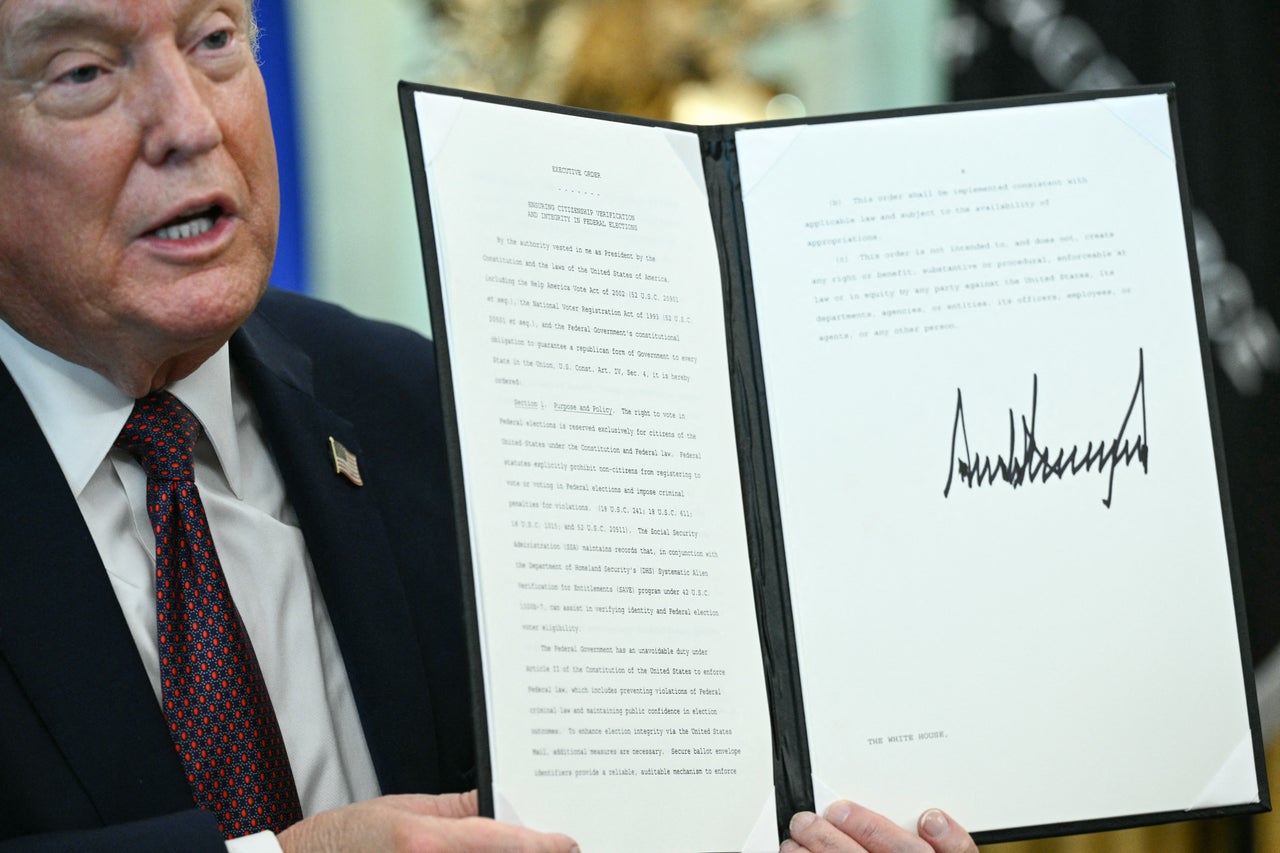
Trump’s attempts to overhaul election administration and implement federal control of the nation’s elections have hit roadblocks in federal courts and in Congress, where even Republican senators are wary of blowing up the filibuster to pass the president’s measures (AFP/Getty)
Under the proposed changes, states would be required to collect and report voter information — collected by the federal government — through a unique barcode printed on every mail-in ballot.
If states don’t comply, they won’t be able to use ballots.
The proposals follow Trump’s false and inflated claims around mail-in ballots, including complaints during 2020 elections that Republicans would “never” win without changing rules for voting by mail.
The Trump administration has argued that federal court orders that block new mail-in ballot rules were premature, and that their impacts were only speculative because the rules had not yet been finalized.
“The Postal Service’s final rule imposes only modest requirements for preparation and envelope design for federal ballot mail — requirements that fall well within its traditional authorities to impose mailing standards for particularly sensitive types of mail,” Sauer wrote to the Supreme Court on Monday.
Voting rights groups who sued the administration to block the Postal Service rule have asked federal courts to step in now that the rule has been finalized.
“A federal district court issued a preliminary injunction less than two weeks ago to stem the chaos caused by this executive order,” lawyers for the groups wrote Monday. “By issuing this final rule, the Trump administration has flouted the court’s injunction.”
The new rule “threatens further chaos for voters, civic organizations, and election officials by seeking to impose last-minute changes to mail voting rules,” they said. “Enforcement of the court’s preliminary injunction is necessary to hold this administration accountable for its unlawful action and make clear that voters can confidently cast their mail ballot free from federal interference this November.”
Despite calling mail-in voting “cheating,” “corrupt” and a “scam,” the president has routinely cast his ballots by mail — including for this month’s Republican primary elections in Florida.
“As President Trump has said, the SAVE America Act has commonsense exceptions for Americans to use mail-in ballots for illness, disability, military, or travel – but universal mail-in voting should not be allowed because it’s highly susceptible to fraud,” White House spokeswoman Olivia Wales said in a statement shared with The Independent last week.
Source: “AOL Breaking”
