


Supermarket fridges can’t cope with the heat in Broken Britain
Supermarket fridges can’t cope with the heat in Broken Britain

Guy KellySat, June 27, 2026 at 5:52 PM UTC
0
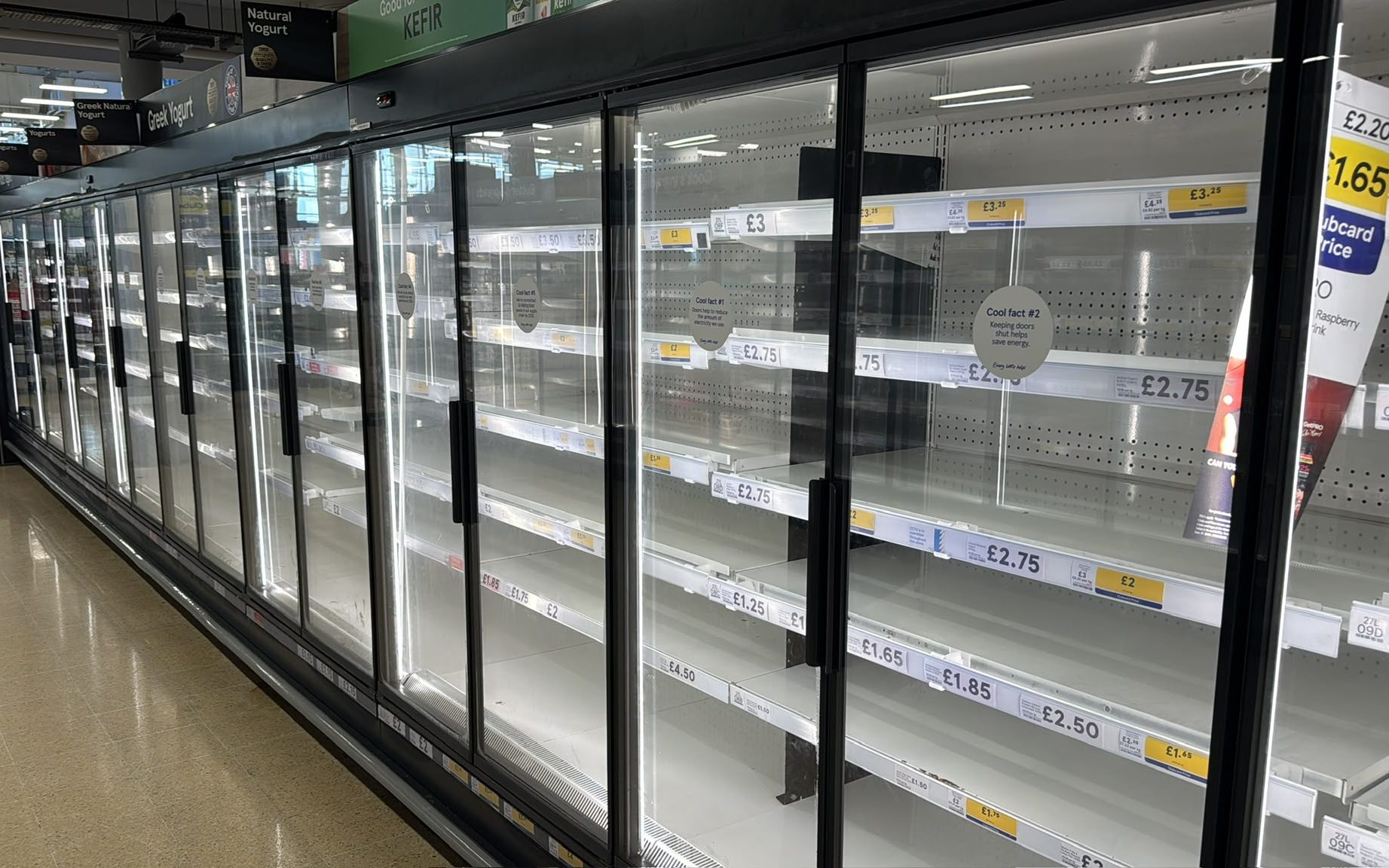
Empty shelves at Streatham Hill Tesco this week - Ben de Groot
Supermarkets have always been precision-engineered to know consumer behaviour inside out. So it is that they seem to know what we want before we’ve even thought of it. Every element – from pricing and layout to car park and colour scheme – has been thought about with our psychology in mind.
Imagine shoppers’ surprise this week, then, to find that most supermarkets across the country had taken the most unhinged, enraging decision possible: during the three hottest June days on record, they decided to shut the fridge aisles.
The rumours came first, via my South London area’s parents’ WhatsApp group – a gargantuan operation that could bring down the Government if it so wished. “Morning, don’t go to Streatham Tesco Extra – their fridges and freezers are broken,” came an announcement, with the gritted teeth emoji.
A photograph followed, showing not just empty fridges, but entire aisles closed off and chest freezers similarly bare. Elsewhere, photos from other large supermarkets around the country would suggest, staff may well have bagged up the food within and binned it.
It turned out it wasn’t just Tesco. Branches of almost all the major supermarkets, including Sainsbury’s, M&S and Waitrose, closed either some or all of their fridges this week, largely thanks to high temperatures rendering the machines inefficient.
“These are older systems, and they’re struggling in the heat,” explains Rupert Ashby, the chief executive of the British Frozen Food Federation (meaning the fridges, rather than the customers, who seem to have been coping much better).
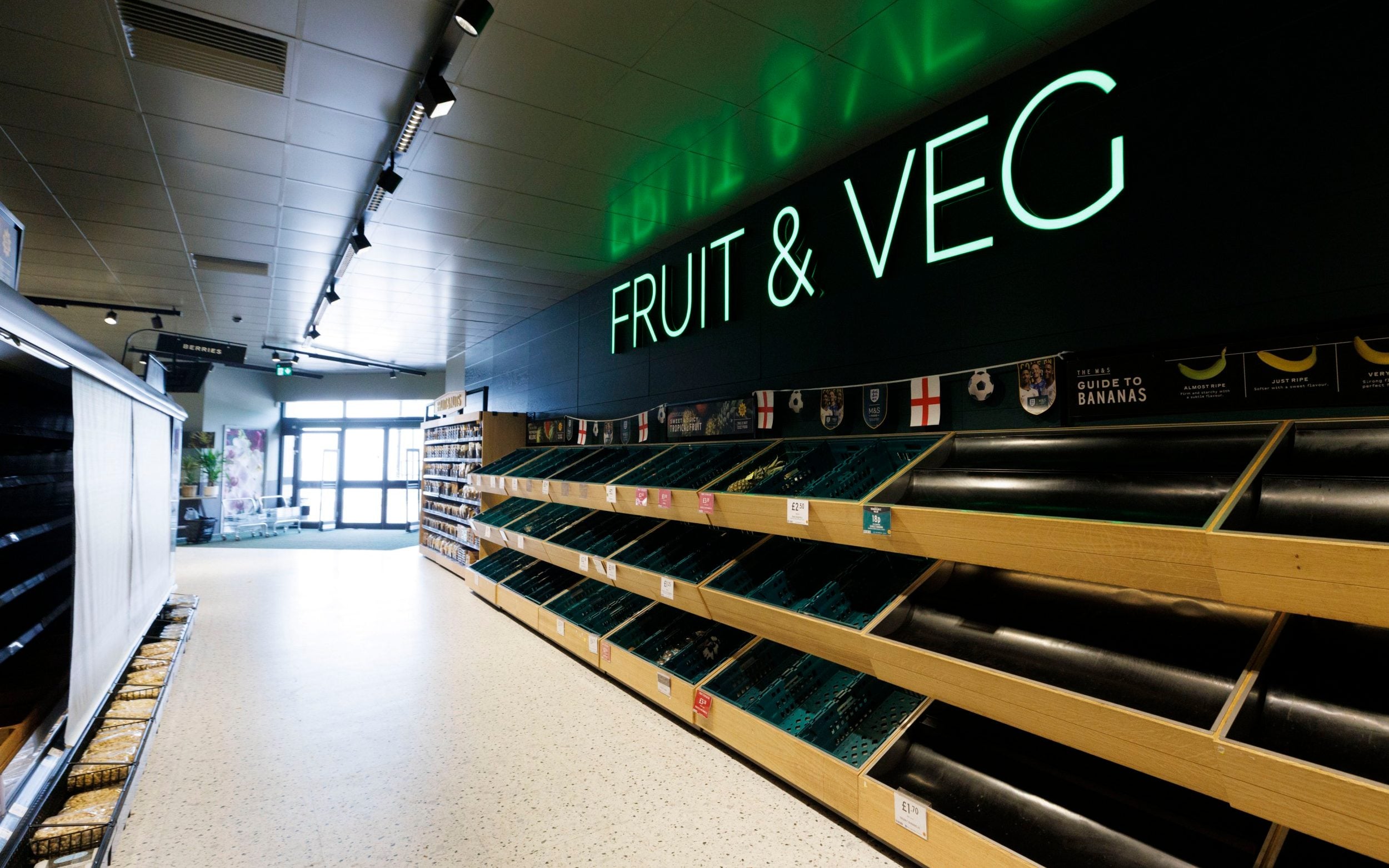
Fresh fruit and vegetables missing from the shelves at the Finchley Road branch of M&S - Belinda Jiao
“In older stores, which is most supermarkets really, you have whole banks of fridges and freezers on concrete floors, which are all connected and run by a remote system out in the car park, or on the roof.
“These might have been built 40 years ago, and they’re very efficient, in a temperate climate, taking the hot air out and dumping it outside. But if the temperature outside is very, very hot, they have to work so much harder and become very inefficient.”
By “inefficient”, Ashby doesn’t necessarily mean more expensive (though some supermarket staff were allegedly telling customers that the fridges were now too pricey to run) but rather that by struggling to remove heat, the whole system slows and fails to do what it is meant to do – not unlike a whirring old laptop.
Ashby says this is one type of fridge-and-freezer set-up you find in UK supermarkets, but the other is a more modern, plug-in unit that expresses the hot air back into the store itself. The store is air-conditioned, which deals with that air more efficiently – though they can still be made inefficient by a customer leaving the door open.
In fact, a few years ago, a campaign argued that the UK could cut its total electricity usage by 1 per cent if the top five British supermarkets put doors on fridges. This is partly why some supermarkets have kept fridges on this week but pulled modesty screens over them (“My blinds are down to help keep our food cool,” read a sign in Sainsbury’s, in that grating anthropomorphic manner brands use), to act as temporary doors.
The other benefit of newer stores is that the floors are raised and modular, allowing for easy repairs. In the older ones, if one machine goes down, they all do. But machines can also be taken out of service when they appear to be struggling to cope and an on-site manager errs on the side of caution.
“In fact, if you needed a shorter answer to why this has happened this week, it’s a food safety issue. There’s probably nothing wrong with eating lots of the food in those fridges and freezers if it’s defrosted a bit, especially the fruit and veg, but these are big companies, the world we live in means they wouldn’t take the risk.”
It’s an understandable explanation, but you can forgive customers’ surprise at discovering that a remarkable (but not entirely unheard of) heatwave can effectively break UK supermarkets, and presumably result in millions of pounds in wasted food.
“British summer update: the supermarket fridges have officially given up,” wrote influencer Rayan Basma (@mommy_and_her_girlies) on Instagram, alongside a video of her wandering around the shelves of an M&S that looked as if she’d broken in overnight.
Basma’s video was taken at the Temple Fortune branch of M&S on Finchley Road in North London.
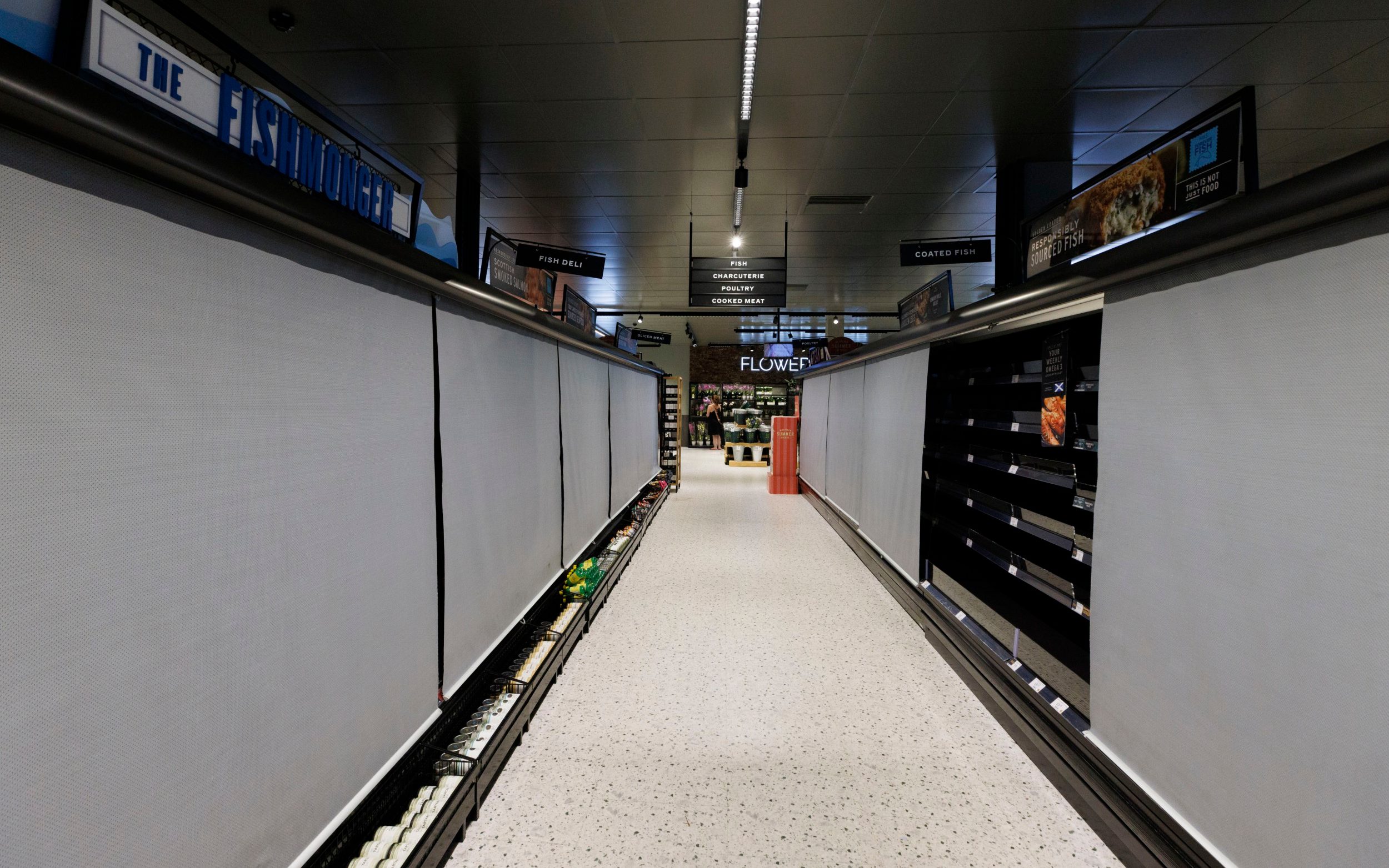
Screens covered shelves devoid of produce in M&S in Finchley - Belinda Jiao
“It feels like a new Covid,” says 40-year-old Joanna, after photographing the empty aisles to share with disbelieving friends and family on Saturday afternoon. “I think they’ve had a fridge breakdown since the beginning of the heatwave. It has just got worse, and today is the worst I’ve seen.
“I was hoping that the ice cream would be back but I think they haven’t fixed the issue.”
Advertisement
Another customer, Liz, had wanted frozen supplies for a World Cup viewing party on Saturday evening, but left empty-handed. Aaron and Simone wanted pistachio ice cream and some steak, having struggled to find other supermarkets with working freezers nearby.
“We’ve been into loads of stores, I went to Tesco in Harlesden and Costco in Wembley yesterday and by the time I got to the till I doubled back to get some ice cream, they had boarded up all of the freezers, saying ‘you can’t take anything because the freezers are broken.’”
Robert, 70, says: “When you consider that the entirety of [M&S’s] business – they’re a food hall – is about keeping food cool or frozen, and they’ve been in business for 100 years, I think it’s emblematic of exactly what this country is turning into. It’s completely incapable of dealing with anything.”
And it has been the scene in supermarkets across the nation: dark veils drawn, as if the dairy aisle were a mafia widow, hastily written apology notices taped to fridge doors.
“For anyone planning a food shop at Tesco Hythe this weekend... You might want to go elsewhere,” a community group in Essex announced, with photographs of its own barren aisles.
“Just a heads up, M&S at Nugent have emptied all their fridges and freezers of food because they can’t cope with the heat,” a woman in Orpington, Kent, wrote. There were similar reports from up and down Britain – Bristol, Merthyr Tydfil, Newcastle, Fylde, Carlisle, the Isle of Man, Taunton – nowhere seemed to escape the Big Thaw.
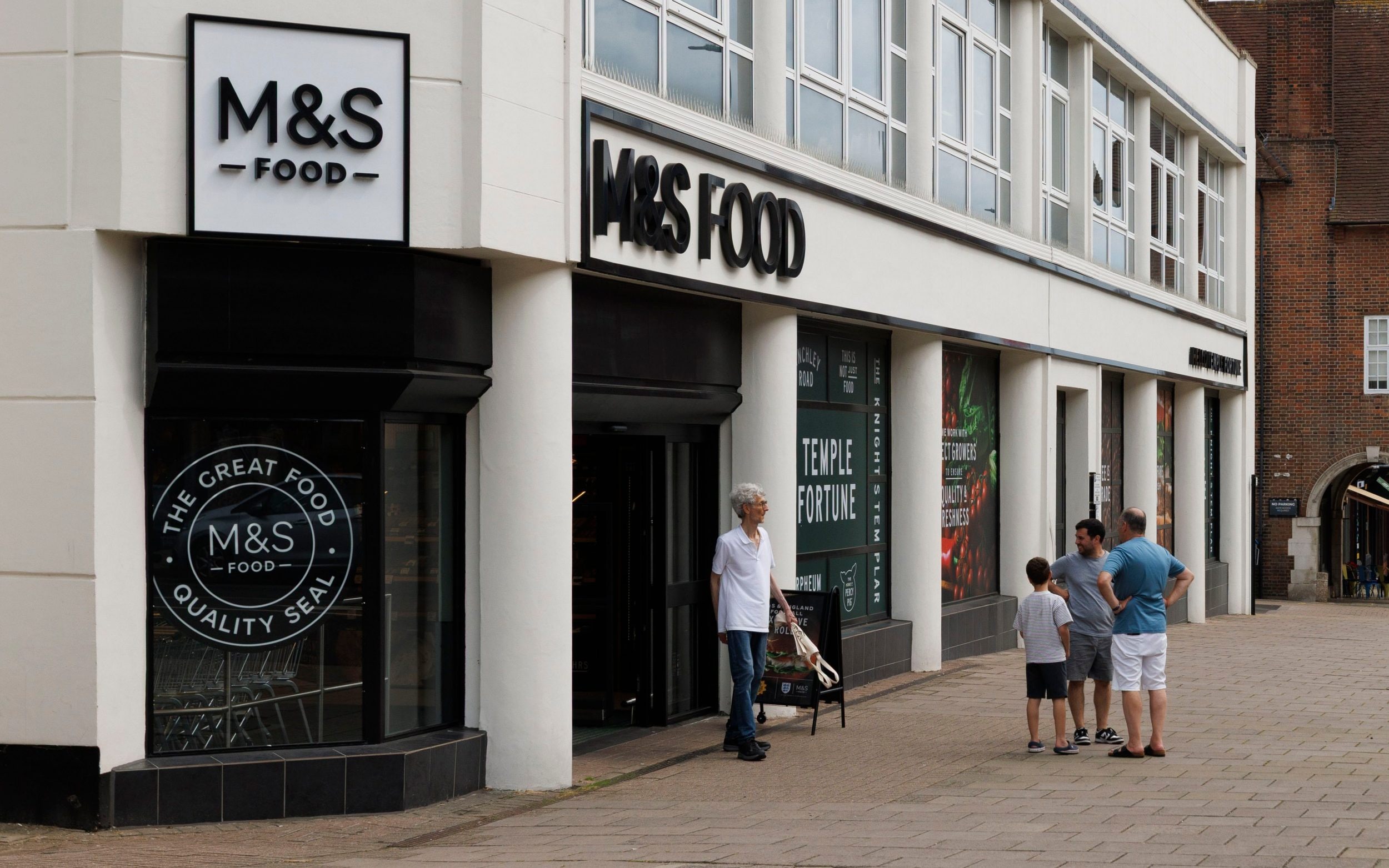
Shoppers at M&S in Finchley Road leaving the store empty-handed - Belinda Jiao
Some customers have complained of their weekly food delivery being cancelled, while a few live in locations where not a single supermarket had a functioning fridge.
Phil Pluck, the chief executive of the Cold Chain Federation told The Grocer that chilled warehouses, where stock which ends up in those switched-off fridges is kept, might start to fail if the heatwave persists.
Ashby says that no supermarket would willingly switch fridges off merely to save energy, as it’s all wasted profit. Nor would they bin food they could feasibly (and safely) save. “And Waitrose were certainly taking what they could back to freezer warehouses or into chilled lorries, but I don’t know about others.”
In his role heading up the British Frozen Food Federation, he warned ministers that “we need to watch out for something like this happening, so the infrastructure has to be there,” he says.
“The old food minister, Daniel Zeichner, would listen, but less so since. But the people who fortunately do take it very seriously are the National Preparedness Committee, they’re very good at recognising that it’s very much in our interests to care about this issue.”
One report last year found that up to 70 per cent of a supermarket’s non-supply-chain carbon emissions stem from cooling – mostly from energy consumption and the use of hydrofluorocarbon (HFC) refrigerants, potent greenhouse gases.
Ashby has written to Ed Miliband, the Energy Secretary, with one very simple, very specific proposal that might just help the planet and the customers: that we raise the temperature of freezers.
“Do you know why we currently set it at -18C? Because Clarence Birdseye, who invented modern freezers in 1924, worked off zero Fahrenheit, which is -18 Celsius. Think of all the progress we’ve made in 102 years, but we’ve never looked at it again.”
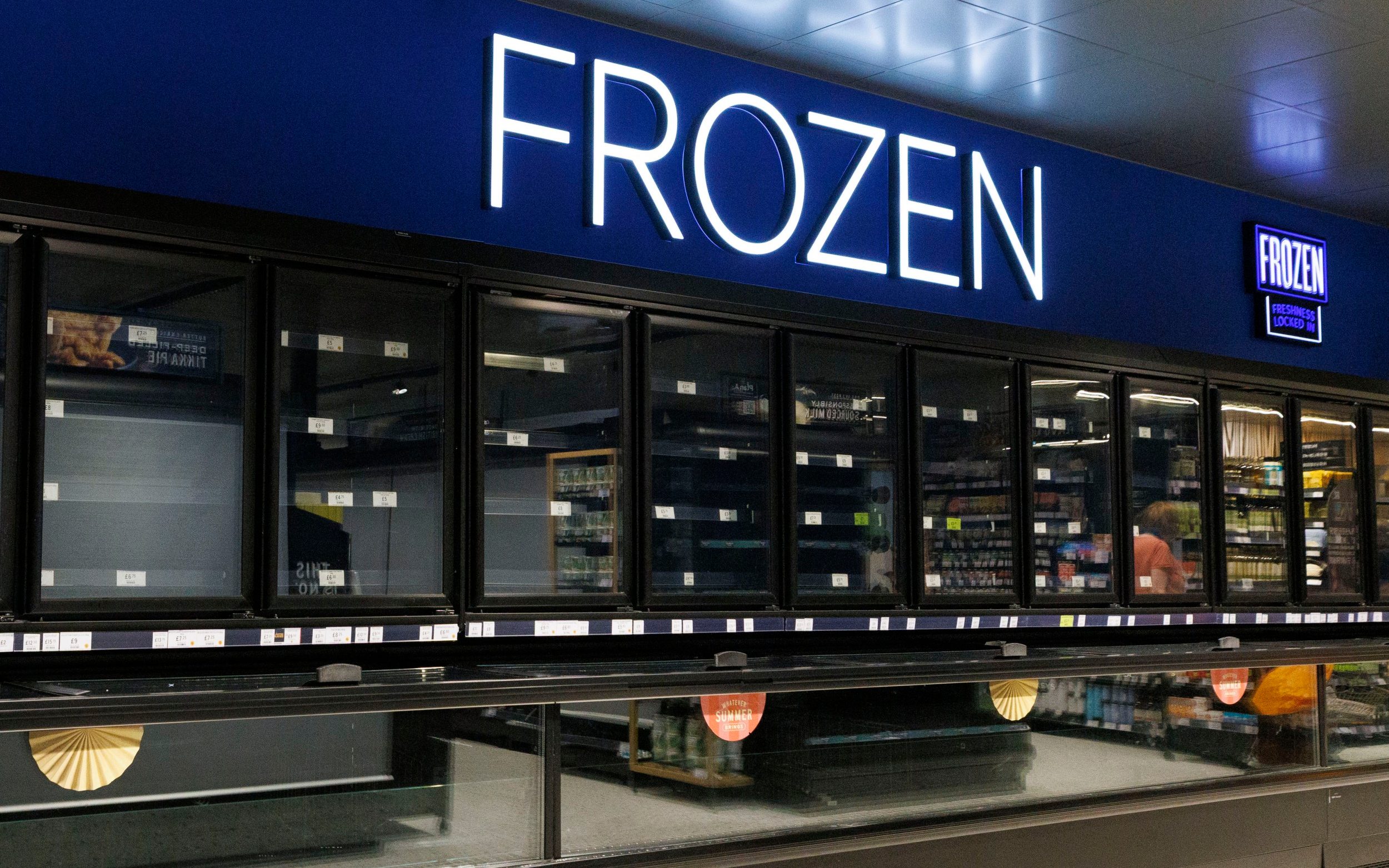
The empty frozen shelves in M&S are likely to result in profit loss - Belinda Jiao
He proposes that even three or four degrees Celsius warmer would do no harm to food safety (“but maybe quality, though it varies”) and save an enormous amount of energy. Plus, in weeks like this, the freezers might have stayed switched on.
Back at Temple Fortune M&S, a steady trickle of customers resorted to heading across the road to Waitrose. The fridges there were working, but empty too, thanks to the shortages elsewhere.
Robert points out that this M&S branch was recently closed for a full refurbishment, and yet the fridges still can’t cope with today’s weather. “It’s insane,” he sighs.
Try full access to The Telegraph free today. Unlock their award-winning website and essential news app, plus useful tools and expert guides for your money, health and holidays.
Source: “AOL Money”
