


Is It Safe to Eat Salad Again? Here’s What Food Safety Experts Are Doing
Is It Safe to Eat Salad Again? Here’s What Food Safety Experts Are Doing

Korin MillerMon, August 24, 2026 at 6:56 PM UTC
8
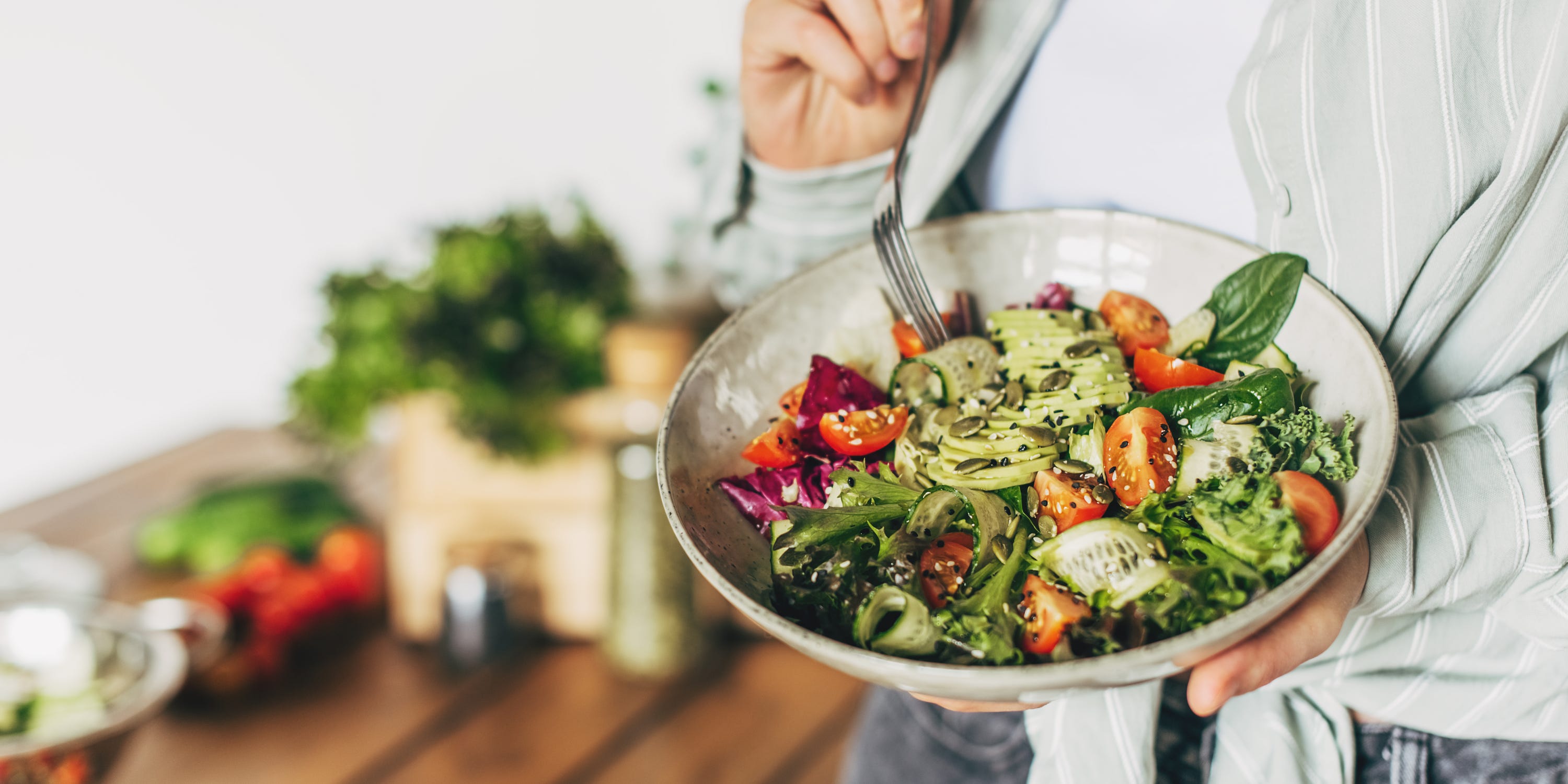
Is It Safe to Eat Salad Again?Kseniya Ovchinnikova - Getty Images
"Hearst Magazines and AOL may earn commission or revenue on some items through these links."
Summer 2026 has raised a question we thought we’d never have to ponder: Will eating this crunchy, tasty salad give me explosive diarrhea for the next few weeks? It’s all thanks to news of cyclosporiasis, a GI illness caused by the parasite Cyclospora that has surged over the last couple of months.
Since May 1, the Centers for Disease Control and Prevention (CDC) has received reports of 15,716 lab-confirmed cases of cyclosporiasis. This includes 10,930 cases specifically linked to recalled iceberg lettuce. CDC officials also note that there are at least 11,841 more cases of cyclosporiasis that need to be investigated, suggesting that the illness counts will continue to grow.
It’s a huge jump from the number of cyclosporiasis cases we’d expect over the summer: The CDC reported 1,180 cases in the U.S. between May 1 and August 31 last year, for instance.
So it’s not surprising that cyclosporiasis fears are changing the way Americans buy and eat greens. About 6.5 million fewer households purchased salad mixes and kits in the month ending July 26 than they did the previous month, according to estimates from Numerator, a market research company that tracks purchasing behavior in the U.S. And sales of lettuce have stalled, too.
If you’ve noticed marked-down greens at your local supermarket—or are simply craving a big bowl of salad to beat the heat—it’s understandable to wonder if it’s safe to eat lettuce again or if you should pause it over concerns about contracting Cyclospora and the explosive diarrhea that can come with it.
On July 17, Taylor Farms recalled iceberg lettuce that had been linked to the outbreak. But food safety experts say there may be more to this story. As a result, the answer to whether it’s safe to eat lettuce again is a little complicated.
Meet the experts: Ellen Shumaker, Ph.D., food safety expert and director of outreach for the Safe Plates program at North Carolina State University; Wade Syers, D.Soc.Sci., food safety specialist at Michigan State University; Darin Detwiler, Ph.D., author of the book Food Safety: Past, Present, and Predictions and a professor at Northeastern University
Is it safe to eat lettuce again?
It’s the big question on all of our minds, but unfortunately, the answer isn’t quite clear-cut: It depends. “The recalled lettuce should no longer be available based on the recall dates and the Food and Drug Administration’s assessment,” says Wade Syers, D.Soc.Sci., food safety specialist at Michigan State University. That means you’re no longer able to buy the specific products included as part of the recall.
But case counts continue to increase, and public health officials are still investigating the lettuce outbreak and other Cyclospora illnesses, he points out.
“Because those investigations are ongoing, I don’t think we’re at a point where we can definitively say all risk has passed,” Syers says. Basically, it’s possible there are other sources that haven’t been identified yet.
What’s more, fresh produce like lettuce “is always going to come with some level of risk because it does not have a kill step—cooking—before being eaten like foods that are cooked,” says Ellen Shumaker, Ph.D., food safety expert and director of outreach for the Safe Plates program at North Carolina State University. Lettuce also has properties that support the presence of pathogens that can make people sick, she says—for instance, its folds and rough texture can help tiny parasites stick around even after washing.
Still, Shumaker says that the risk of Cyclospora contamination in lettuce is “much lower” than it was at the start of the outbreak since the recalled lettuce implicated is “no longer in the supply chain and is long past its shelf life,” she says.
What about eating lettuce in restaurants?
You can read labels to get some sense of where greens originated when you buy them in a grocery store. But restaurants are a different story. Restaurants may source lettuce from local suppliers, bigger purveyors, or a mix of the two, making it difficult to know where your lettuce came from.
But restaurants should get recall notices from their purveyors if they have any impacted foods, and are obligated to remove affected foods from their supply.
Advertisement
“I wouldn’t tell people to avoid restaurant salads, but I also wouldn’t suggest the investigations are over,” Syers says. “Even though the recalled lettuce should no longer be in the supply chain, consumers should continue paying attention to outbreak updates and recalls as new information becomes available.”
Darin Detwiler, Ph.D., author of the book Food Safety: Past, Present, and Predictions and a professor at Northeastern University, has a similar take. “You are likely OK now, but it is reasonable to be selective,” he says. “Because the affected best-by dates have passed, restaurants should no longer have that recalled lettuce.”
Detwiler also says the outbreak has been a good reminder of the importance of food safety practices in general—something to keep in mind even after the current outbreak passes.
“The question is not, ‘is restaurant lettuce unsafe?’ It is ‘do I trust this establishment’s food safety discipline?’” he says.“For a well-run restaurant with normal turnover, the risk should be low. For places with poor cleanliness, unclear sourcing, or questionable handling, I would be more cautious.” (But, of course, this should be in the back of your mind all the time, not just during an outbreak.)
Should certain people be more cautious than others?
Everyone has the potential to get sick from a Cyclospora infection—which can come with abdominal cramps, bloating, nausea, and fatigue, in addition to the explosively watery diarrhea. But people who are very young, older adults, and those who are immunocompromised may want to be especially careful, Syers says.
“Although foodborne illness can be serious for anyone, people who are immunocompromised or otherwise at higher risk should always be more cautious when it comes to foodborne illness because the consequences of getting sick can be even more serious for them,” he says.
While most people who are sick with cyclosporiasis will recover without treatment—though symptoms might last over a month if you don’t receive antibiotics—those with a weakened immune system or other health conditions might be at risk of a more severe or longer-lasting case, per the CDC. The infection can also inflame or damage the intestines, gallbladder, and bile ducts in people with weakened immune systems, according to the Mayo Clinic.
But Shumaker recommends putting this into perspective with the latest outbreak. “With the slowing down of the Cyclospora cases, I am not overly concerned about that specific risk for immunocompromised people [right now],” she says.
Cyclospora’s ‘season’ is winding down.
You can technically get a Cyclospora infection any time of year, but cases are more common from May 1 to August 31. “We do tend to see higher rates of Cyclospora in the summer, given the high temperatures and large consumption of fresh produce,” Shumaker says. “As temperatures and humidity drop, we typically see a drop in Cyclospora cases as well.”
Syers says that Cyclospora is “usually a seasonal problem,” noting that we’re approaching the time when cases tend to drop.
“At the same time, investigations are still ongoing, and cases are still being reported, so I don’t think we’re at the point where we can say it’s over,” he says.
Food safety experts aren’t skipping greens—but are taking precautions.
Syers says he still eats lettuce. “But I pay closer attention to recalls and outbreak updates,” he says. “I also stick to the basics, like washing my hands and rinsing produce under running water. Those are good habits every day, not just when there’s an outbreak.”
While Shumaker says she prefers spinach over lettuce, she notes this: “My fresh produce habits have not changed this summer.”
If you want to take advantage of those lettuce sales, Detwiler stresses the importance of buying your greens from a “trusted grocer” with clear labeling, current dates, and no connection to the recall. “I would also shift temporarily toward cooked vegetables, whole heads of lettuce I can inspect and wash, or non-lettuce greens from trusted sources,” he says. “The goal is not fear. The goal is informed caution.”
You Might Also Like
15 Pre-Workout Snacks You Can Prep Ahead of Time
Common Household Items Linked to Thousands of Deaths From Heart Disease
I Slept on the Saatva Classic Mattress for 5 Months—Here’s My Verdict
Source: “AOL Breaking”
